Friday, March 13th
Morning
10:00-11:00 – Registration for Day 1 – 2/F SUB Foyer
11:00-11:15 – Introductions – 2/F SUB Foyer
11:15-12:00 – Keynote Speeches with Dr Margot Latimer and Katie Gloade – McInnes Room
Afternoon
12:00-12:45 – Lunch – McInnes Room
12:45-13:45 – Panel 1 – Women’s Health – McInnes Room
14:00-15:00 – Oral Sessions
Applied Science/Engineering and Clinical Research (Pt. 0) – Council Chambers
Clinical Research (Pt. 1) – SUB, Room 224
Health Inequity (Pt. 1) – SUB, Room 302
Population Health (Pt. 1) – SUB, Room 307
15.00-16.00 – Panel 2 – Combatting Misinformation – McInnes Room
16.00-17.00 – Poster Session 1 – 2/F SUB Foyer
17.00-20.00 – Social Event (Mixer with Bingo and Live Band) – SUB, Abstract Cafe
Saturday, March 14th
Morning
08:45-09:45 – Registration Day 2
09:00-09:45 – Breakfast/Introductions
10:00-11:00 – Oral Sessions
Health Policy/Health Law – SUB, Council Chambers
Clinical Research (Pt. 2) – SUB, Room 224
Health Inequality (Pt. 2) – SUB, Room 302
Population Health – SUB, Room 307
Afternoon
11:15-12:15 – Oral Sessions
Kinesiology/Human Movement – SUB, Council Chambers
Mental Health/Addiction – SUB, Room 224
Health Inequity (Pt. 3) & Health Admin/Business – SUB, Room 302
Recreation & Leisure – SUB, 307
12.15-13.00 – Lunch – SUB, McInnes Room
13.00-14.00 – Mini-Courses
1: Shaping Health Research Through Lived Experience – SUB, Council Chambers
2. Where Academia Meets Application – SUB, Room 307
14.00-15.00 – Poster Session 2 – 2/F SUB Foyer
15.30-16.00 – Ending Remarks & Award Presentations – SUB, McInnes Room
16.00 onwards – Social Event (Board Games and Snacks) – SUB, McInnes Room
Speaker Information
Keynote speakers – Friday, March 13th

Dr. Margot Latimer is a white, settler Canadian of Scottish ancestry. She lives and works on the unceded and ancestral territory of the Mi’kmaq. She is a Professor in the Faculty of Health and is cross-appointed in the Department of Medicine at Dalhousie University. Margot is the CIHR Research Chair in Indigenous Health Nursing in Nova Scotia and holds a scientific appointment at IWK Health. Since 2008, she has been working closely with First Nation communities to mobilize Indigenous knowledge to improve healthcare experiences and access to culturally safe education. Margot co-leads several projects with community researchers, including the CIHR funded “Aboriginal Children’s Hurt and Healing” Initiative, the Chronic Pain Network, and the Research Nova Scotia-funded W’loti Etuapmunk: Using Mi’kmaw Knowledge to Create Health & Wellness Solutions.

Katie Gloade, MEd, CCC, PhD (c) is a PhD Health candidate at Dalhousie University and a member of Millbrook First Nation. She began her career as aclassroom teacher and completed a Master of Education in Educational Psychology at Mount Saint Vincent University, followed by a Master of Education in Counselling at Acadia. She has been a school counsellor since 2016, is a Certified Canadian Counsellor with the Canadian Counselling and Psychotherapy Association. Katie is an Assistant Professor in the School of Nursing at Dalhousie and is the lead instructor for the interprofessional course “Introduction to Cultural Safety in Healthcare for Indigenous Peoples”,
a required course for all first-year students in the schools of Medicine, Dentistry, Pharmacy, Dental Hygiene, Physician’s Assistants and Nursing. Katie has recently taken on a new role as the Indigenous Scientific Director with the Research Nova Scotia funded project Etuaptmu’k W’loti: Using Mi’kmaw Knowledge to Create Health & Wellness Solutions. She is involved in several committees and research initiatives in addition to her PhD research, with a common aim of improving experiences in education and healthcare for Indigenous children and their families. Her PhD dissertation explores school readiness from an L’nu (Mi’kmaw) Worldview.
Panelists – Friday, March 13th
Panel 1: Women’s Health

Dr Megan Aston, RN, PhD, is a Full Professor at Dalhousie University School of Nursing. Her program of research focuses on family, perinatal, child, and newborn health and is guided by qualitative methodology and feminist poststructuralism. Her research in Canada and Tanzania includes: virtual village online postpartum support sessions, mapping mothers’ social networks;
postpartum home visits; and hospital experiences of children with intellectual disabilities.

Dr Nichole Austin is an Assistant Professor in the School of Health Administration at Dalhousie University, with cross-appointments in the Department of Community Health and Epidemiology and the Department of Obstetrics and Gynaecology. She is an epidemiologist with research interests in health policy evaluation, reproductive health, and health inequities. Nichole is particularly interested in how social policies create, mitigate, or exacerbate inequities in access to care and associated health outcomes. Selected recent work includes assessments of the impact of abortion policy on subsequent service accessibility/uptake in the US and Canada, long-acting forms of contraception and the incidence of sexually transmitted infections, and an adaptation of difference-in-differences for siloed data contexts.

Dr Justine Dol is the inaugural Dr. Margaret Oulton Accelerate Chair in Women+ Health Research at IWK Health, where she leads the EMPOWER research program (Enhancing Medical and Psychosocial Outcomes in Women+ and Parents through E-Health Resources). Her research harnesses digital innovation to promote equitable health and wellbeing among women+, parents, and families. Dr. Dol has authored more than 90 peer-reviewed publications and received funding from local, national, and international agencies. She developed the Essential Coaching for Postpartum text message program, which supports birthing and non-birthing parents during the first six weeks postpartum in Canada and Tanzania. Through her leadership, she is shaping the future of women+ health research to advance equity, inclusion, and impact across populations and settings.
Panel 2: COMBATTING MISINFORMATION – Strengthening Public Trust Through Community Engagement and Knowledge Mobilization

Dr Jennifer Stamp received her BSc in Neuroscience from Dalhousie University and PhD in Anatomy from Cambridge University. She trained as a neuroanatomist and neuroendocrinologist, and published articles on the topics of stress, hormones, addiction, and sleep and co-authored two editions of an introductory Psychology textbook. Dr. Stamp currently holds a position as a
Teaching Fellow in the Department of Psychology & Neuroscience at Dalhousie, where she has been since 2003. She has played an active role in undergraduate teaching and research, concentrating in the areas of Integrated Science, Introductory Psychology, Neuroanatomy, Neuroendocrinology, Pharmacology, Addiction, and Social Psychology. Her work on innovative
teaching strategies has culminated in the development of several online introductory courses and she has received numerous teaching awards. Dr. Stamp’s current work focuses on development of online, active learning modules as well as tools to enhance science literacy. She has been invited to
speak at local, national, and international teaching and learning conferences.

Dr Daniel Rainham is a Professor in Health Promotion in the School of Health and Human Performance, is cross-appointed with the Department of Community Health and Epidemiology at Dalhousie University and is an Affiliate Scientist with Nova Scotia Health. His research focusses on 1) issues in environmental epidemiology with specific focus on air pollution, noise and effects of the built environment on health, and 2) environmentally sustainable healthcare systems. He is also the Academic Director and Co-founder of the Centre for Planetary Health and Sustainable Care (sustainablecare.ca).

Dr Jeff Karabanow is Professor and Associate Director in the School of Social Work at Dalhousie University and cross-appointed with International Development Studies, College of Sustainability and The School of Health and Human Performance. He has worked with homeless populations in Toronto, Montreal, Halifax and Guatemala. His research focuses primarily upon housing stability, service delivery systems, trauma, and homeless youth culture. He has completed a film documentary looking at the plight of street youth in Guatemala City and several animated shorts on Canadian street youth culture. He has numerous academic publications in these areas including: Being Young and Homeless: Understanding how youth enter and exit street life (Peter Lang
Inc NY.,2004) ; Leaving the Streets: Stories of Canadian Youth (Fernwood Publishing, Halifax, 2010) and Homeless Youth and the Search for Stability (WLU Press Inc., Ontario, 2018). His most recent SSHRC funded research study explored homelessness in Halifax during COVID.
Dr Karabanow is one of the founding members of Halifax’s Out of The Cold Emergency Shelter and
Supportive Housing for Young Mothers and currently is the Co-Director of the Dalhousie School of Social Work Community Clinic. He was awarded the Dalhousie Faculty of Health Senior Research Award (2014) and the William Webster Excellence in Interprofessional Education Award (2019). He is also a recent awardee of the Senate of Canada 150 Medal (2019) and the 2025 Dr
Anne Marie Ryan Community Growth Award.
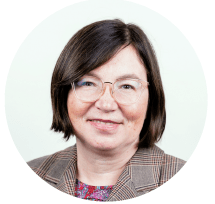
Dr Alla Kushniryk, PhD, is an Associate Professor and Chair of the Department of Communication Studies at Mount Saint Vincent University. The department, which recently celebrated its 48th anniversary, is renowned for its undergraduate and graduate programs in Public Relations at MSVU, recognized as the flagship PR programs in Canada. Her research focuses on social media, organizational communication, trust, and quantitative research methods.
Mini-courses – Saturday, March 14th
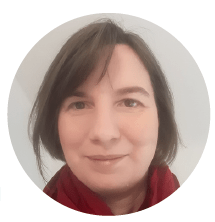
Jacklynn Pidduck (she/her) is a Registered Social Worker and the Transition Coordinator with the Children’s Health Program at IWK Health in Halifax, NS. Jackie received her Master of Social Work degree from Wilfrid Laurier University. She has worked as a Social Worker for over twenty five years in several different capacities from community development work with neighbourhood groups to clinical care in hospital. In her current role, Jackie supports the Transition of Care Committee comprised of patient partners, caregivers, healthcare providers and community partners to improve the transition from pediatric to adult healthcare. Jackie has appreciated the opportunity to bring her experience in clinical care and patient engagement to enhance collaborative research projects while learning how to incorporate research into her own practice.
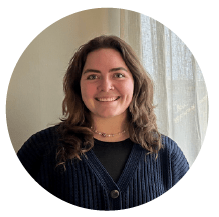
Meg Hannigan is a graduate of the master’s in rehabilitation research program at Dalhousie, currently working as a researcher with Nova Scotia Health in the Department of Orthopaedic Surgery. Her graduate school focus of knee osteoarthritis persists in her current industry work, which investigates lower limb biomechanics and symptomatic arthritis, pre- and post-joint replacement. Meg also works as a biomedical product engineer, leading research and development on an assistive device designed to support independence in healthy aging.
 Crossroads Interdisciplinary Health Research Conference